
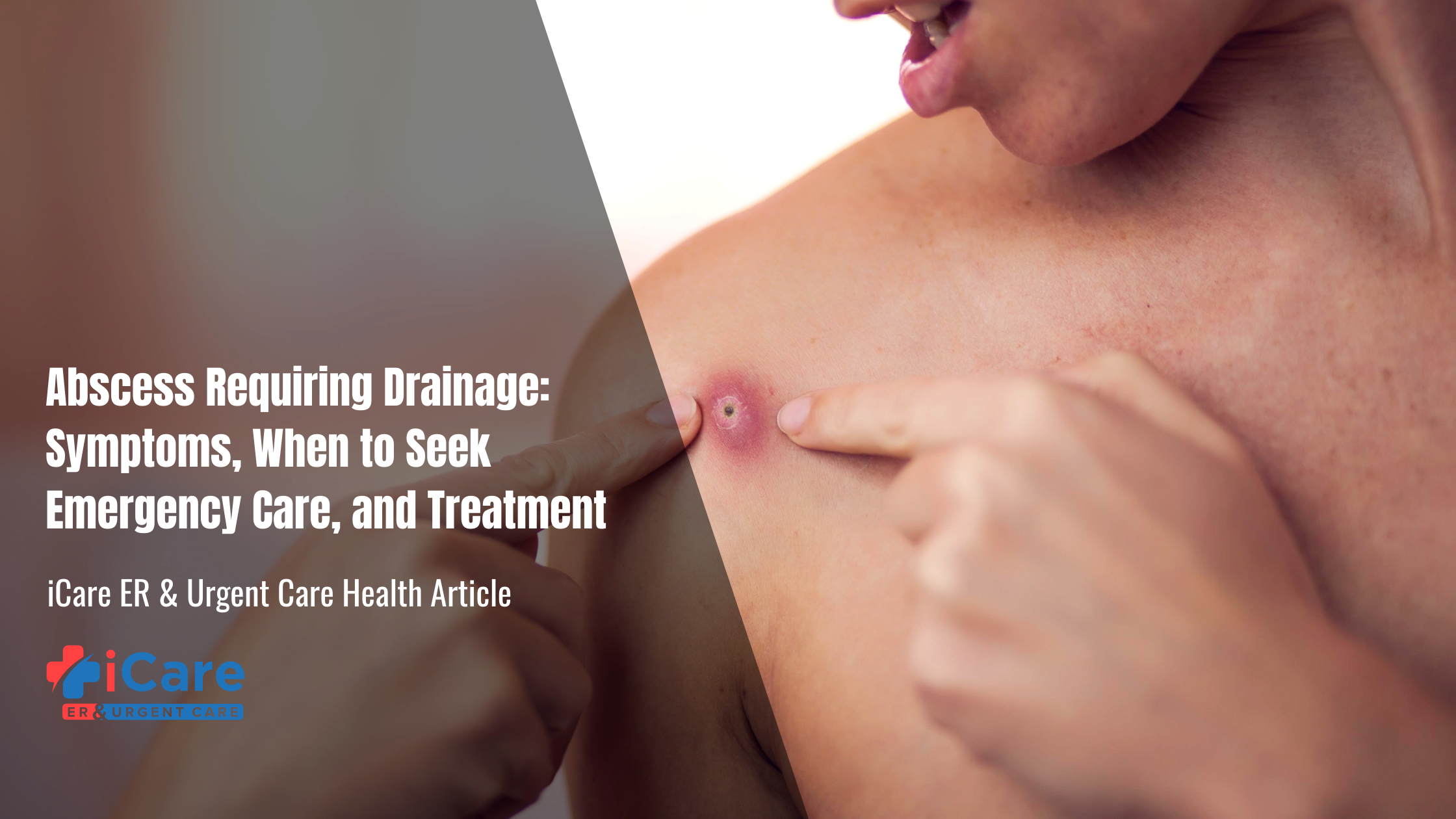
Skin abscesses are a common medical condition that occur when bacteria cause a collection of pus to form under the skin. Common reasons people seek care for abscesses include pain, swelling, or visible pus. Abscesses are pockets of pus that can occur anywhere on your body.
The most obvious symptom of an abscess is a painful, compressible area of skin that may look like a large pimple or even an open sore. While some small infections can improve with basic home care, others require medical treatment — and in many cases, drainage is necessary to allow the infection to heal properly.
At iCare ER & Urgent Care, our medical team frequently treats abscesses and other skin infections. Understanding the symptoms of an abscess and knowing when to seek medical care can help prevent complications and speed recovery.
What Is a Skin Abscess?
A skin abscess is a localized pocket of pus that forms beneath the skin due to a bacterial infection. These infections are commonly caused by bacteria such as Staphylococcus aureus, including strains like MRSA.
Abscesses often begin as small, painful lumps that gradually grow larger as pus accumulates. Because the infection is trapped beneath the skin, topical creams or home remedies are often not enough to treat the condition.
In many cases, the abscess must be drained by a medical professional to remove the infection and relieve pressure.
Common Risk Factors
Several factors can increase the risk of developing an abscess, including:
- Diabetes
- Weakened immune system
- Poor hygiene
- Recent cuts or skin injuries
- Close contact with someone with MRSA or another bacterial infection
Abscesses can develop almost anywhere on the body, but are most commonly found in areas with hair follicles or friction.
Signs and Symptoms of an Abscess Requiring Drainage
Abscesses typically become more painful as the infection grows. The following symptoms may indicate an abscess requiring drainage:
- A tender lump under the skin that feels tender
- Red, swollen skin around the infection
- Skin that feels warm to the touch
- A visible pocket of pus
- Increasing pain or pressure in the area
Other symptoms to watch for include redness, tenderness, or pus drainage from the site. The affected area often feels significantly warmer than the surrounding skin. Common abscess symptoms requiring medical drainage include a painful, tender, red, and warm lump.
Signs that an abscess needs professional drainage include it becoming larger than half an inch (1 cm) across. Worsening pain with a sharp or throbbing sensation suggests an abscess may need drainage. If the abscess is larger than 1 cm (half an inch) or does not improve with warm compresses, it must be evaluated by a professional. An abscess requires professional drainage if it is highly painful, rapidly enlarging, warm to the touch, or accompanied by fever/chills.
Drainage is necessary if the abscess grows quickly, causes fever or chills, or if red streaks spread from the area. You should see a doctor if the abscess develops symptoms such as increased pain, swelling, or fever.
As the abscess matures, the lump may become soft in the center. This is known as fluctuance, which often indicates that the infection has formed a pocket of pus that may need to be drained.
In more serious cases, additional symptoms may develop, such as:
- Fever or chills
- Fatigue
- Increased redness spreading from the infection
- Persistent drainage from the site
These symptoms may indicate that the infection is spreading and requires prompt medical evaluation.
Abscess Incision and Drainage Procedure
The most common treatment for a mature abscess is a procedure called incision and drainage (I&D).
During this procedure:
- The area is cleaned with antiseptic solution.
- Local anesthesia is used to numb the skin.
- A small incision is made to allow the pus to drain.
- The cavity is gently cleaned and flushed.
In some cases, a small piece of sterile gauze may be placed in the wound to keep it open and allow continued drainage.
A sample of the drainage may also be sent for laboratory testing to determine which bacteria are causing the infection and which antibiotics will work best.
Outpatient vs Surgical Drainage
Many abscesses can be treated with a simple drainage procedure performed in a clinic or urgent care setting.
However, larger or deeper abscesses may require treatment in an operating room. This is more common when:
- The infection is large or deep
- The abscess is located in a sensitive area
- The patient requires sedation for the procedure
In these situations, the patient may be monitored closely after treatment before going home.
Antibiotics and MRSA
While drainage is often the most important step in treating an abscess, antibiotics may also be prescribed in certain situations.
Antibiotics are typically recommended when:
- The infection is spreading
- Fever or systemic symptoms are present
- The patient has a weakened immune system
- The abscess is caused by MRSA
Your healthcare provider may also perform a culture of the drainage to identify the bacteria and select the most effective antibiotic treatment.
Other Conditions and Abscesses
Not all lumps, bumps, or painful swellings on the skin are abscesses, and sometimes other conditions can look very similar. For example, cysts and boils may resemble a skin abscess, but they often require different approaches to treatment. Accurate diagnosis is crucial, as a true abscess typically needs abscess drainage to remove the pus inside and promote healing. If you notice symptoms such as sudden dizziness, unusual behavior, or severe pain along with a swollen, red, or tender area, it’s important to seek immediate attention at an emergency room or urgent care clinic.
Emergency medicine specialists are trained to quickly identify life-threatening conditions that may be related to bacterial infection, such as sepsis or deep tissue involvement. If you experience upper abdominal pain, confusion, high fever, or difficulty breathing, these could be signs of a serious infection or other urgent medical issues like a heart attack or stroke.
In these cases, visiting the emergency department is the safest choice. For minor injuries, such as minor cuts or scrapes that show signs of infection but are not severe, urgent care centers can provide the right care, including evaluation and minor procedures.
Treatment for abscesses can range from simple to more complex. Small abscesses may be managed with a warm compress to encourage the abscess to open and drain, but this should only be done under a doctor’s guidance. When abscess drainage is needed, a healthcare provider will typically use a local anesthetic to numb the area before making a small incision to release the pus.
For larger or deeper abscesses, or those in sensitive locations, surgical drainage in a hospital setting may be necessary, sometimes requiring general anesthesia. After the procedure, the healing process involves keeping the wound clean, monitoring for signs of infection, and sometimes taking antibiotics to prevent further complications.
The immune system plays a key role in how the body responds to infection. Patients with weakened immune systems may be more prone to developing abscesses or experiencing recurrent infections. In these cases, close follow-up with a healthcare provider is essential to ensure the infection is fully treated and to prevent other abscesses from forming.
After any abscess treatment, follow up appointments are important to monitor healing and address any concerns. If the abscess is left open to heal, your doctor or nurse will provide instructions on wound care, including how to change dressings and what symptoms to watch for. Recognizing the signs of worsening infection—such as increased swelling, redness, fever, or new drainage—can help you know when to return for emergency care.
Understanding the differences between minor conditions and life-threatening emergencies is vital. While many skin infections can be managed at an urgent care clinic, symptoms like severe pain, mental status changes, or rapidly spreading redness require emergency care. By staying alert to your symptoms and seeking the right care at the right time, you can help ensure a smooth healing process and reduce the risk of complications.
Recovery and Follow-Up Care
After the abscess has been drained, most patients begin to feel relief within a day or two.
Common aftercare instructions may include:
- Keeping the wound clean and covered
- Changing dressings as directed
- Taking prescribed antibiotics if needed
- Attending a follow-up appointment
Many providers recommend a follow-up visit within 48 to 72 hours to ensure the infection is healing properly and to remove any packing placed in the wound.
When to Return for Emergency Care
While most abscesses heal without complications, certain symptoms may indicate the infection is worsening.
Seek medical care immediately if you experience:
- Increasing redness or swelling
- Fever or chills
- Severe or worsening pain
- New drainage or spreading infection
Prompt treatment can prevent the infection from spreading deeper into the body.
Preventing Future Abscesses
Good hygiene and proper wound care can help reduce the risk of future infections.
Helpful prevention tips include:
- Washing hands regularly
- Keeping cuts and scrapes clean and covered
- Avoid sharing personal items like razors or towels
- Treating skin infections early
If abscesses occur repeatedly in the same area, a healthcare provider may evaluate for underlying conditions that could be contributing to recurrent infections.
iCare ER & Urgent Care: Fast Treatment for Skin Infections
Skin infections can worsen quickly if left untreated. If you notice a painful swelling, redness, or signs of infection, it is important to seek medical care promptly.
At iCare ER & Urgent Care, our medical team provides expert evaluation and treatment for abscesses and other skin infections. With locations in Frisco, Forney, and Fort Worth, we offer both urgent care and emergency services to ensure patients receive the right level of care.
Walk-ins are welcome, and our team is available to provide fast diagnosis and treatment when you need it most.
Frequently Asked Questions
Can an abscess heal without drainage?
Small abscesses may occasionally drain on their own with warm compresses, but many infections require medical drainage to fully resolve.
Is abscess drainage painful?
Local anesthesia is typically used during the procedure, which helps minimize discomfort during treatment.
How long does it take for an abscess to heal?
Most abscesses begin improving within a few days after drainage, although complete healing may take one to two weeks depending on the size of the infection.
Is an abscess contagious?
The bacteria causing an abscess can spread through direct contact, so proper hygiene and wound care are important to prevent transmission.
Conclusion
A skin abscess is a painful infection that often requires medical treatment to heal properly. Recognizing the symptoms early and seeking appropriate care can help prevent complications and ensure a faster recovery.
If you suspect you have an abscess that may need drainage, prompt medical evaluation is important. Proper treatment, including incision and drainage when necessary, can relieve pain and stop the infection from spreading.