
Minor burns are among the most common household injuries. Accidentally touching a hot pan, spilling hot water, brushing against a curling iron, or spending too much time in the sun can cause painful skin damage. While many minor burns can be treated at home, some require medical evaluation to prevent infection, manage pain, or address deeper tissue damage.
Knowing how to treat a minor burn at home can help limit additional skin damage and support healing. It is equally important to recognize when a burn is more serious than it initially appears. Some burns that look relatively small can affect deeper layers of skin, particularly when caused by electricity, chemicals, or prolonged contact with heat.
At iCare ER & Urgent Care, our medical team evaluates patients experiencing burns, skin injuries, wounds, and other urgent medical concerns. Understanding when home treatment is appropriate and when to visit urgent care or the emergency room can help you make informed decisions following a burn injury.
Emergency Disclaimer: Call 911 for severe burns, difficulty breathing, suspected smoke inhalation with serious symptoms, or other life-threatening injuries. Serious electrical and chemical burns require prompt emergency evaluation. This article is for general educational purposes and is not a substitute for professional medical evaluation, diagnosis, or treatment.
What Is Considered a Minor Burn?
A minor burn generally involves limited skin damage affecting a relatively small area of the body.
Burns are commonly classified according to how deeply they damage the skin.
First-Degree Burns
First-degree burns, also called superficial burns, affect the outermost layer of skin.
Common symptoms include:
- Redness
- Mild swelling
- Pain or tenderness
- Dry skin
- Sensitivity to touch
These burns typically do not cause blisters.
A mild sunburn is a common example.
Second-Degree Burns
Second-degree burns, also called partial-thickness burns, extend into deeper layers of skin.
Symptoms may include:
- Blisters
- Significant pain
- Redness
- Swelling
- Moist or shiny skin
- Skin peeling during healing
Some small, superficial partial-thickness burns can be treated with basic wound care, but deeper or larger burns require medical evaluation.
Third-Degree Burns
Third-degree burns, also called full-thickness burns, destroy the full thickness of the skin.
The affected area may appear white, brown, black, leathery, or unusually dry. These burns may be less painful in the most severely damaged areas because nerve endings have been destroyed.
Third-degree burns are not minor burns and require emergency medical care.
What Are the Most Common Causes of Minor Burns at Home?
Household burns can occur during everyday activities.
Common causes include:
- Cooking Accidents: Touching hot pans, oven racks, or stovetops.
- Hot Liquids: Spilling boiling water, coffee, soup, or other hot beverages.
- Steam: Exposure to steam from cooking appliances or hot water.
- Hair Styling Tools: Contact with curling irons or hair straighteners.
- Sun Exposure: Spending extended periods outdoors without adequate sun protection.
- Heating Equipment: Touching space heaters, fireplaces, or other hot surfaces.
- Hot Bathwater: Exposure to water that is too hot, particularly among young children.
Chemical and electrical exposures can also cause burns, but these injuries may be more serious than they initially appear and should not automatically be treated as minor.
How to Treat a Minor Burn at Home
Immediate first aid is one of the most important steps following a minor thermal burn.
Step 1: Stop the Burning Process
Move away from the source of heat.
If clothing is hot or burning, stop the exposure immediately. Remove jewelry or loose clothing near the affected area before swelling develops.
Do not pull away clothing that is stuck to burned skin.
Step 2: Cool the Burn With Running Water
Place the affected area under cool running water for approximately 20 minutes as soon as practical.
Cooling can help reduce pain and limit ongoing heat-related skin damage.
Avoid applying ice directly to the burn. Ice can further damage injured tissue.
For larger burns, avoid prolonged cooling that could cause the person to become dangerously cold.
Step 3: Protect the Burn
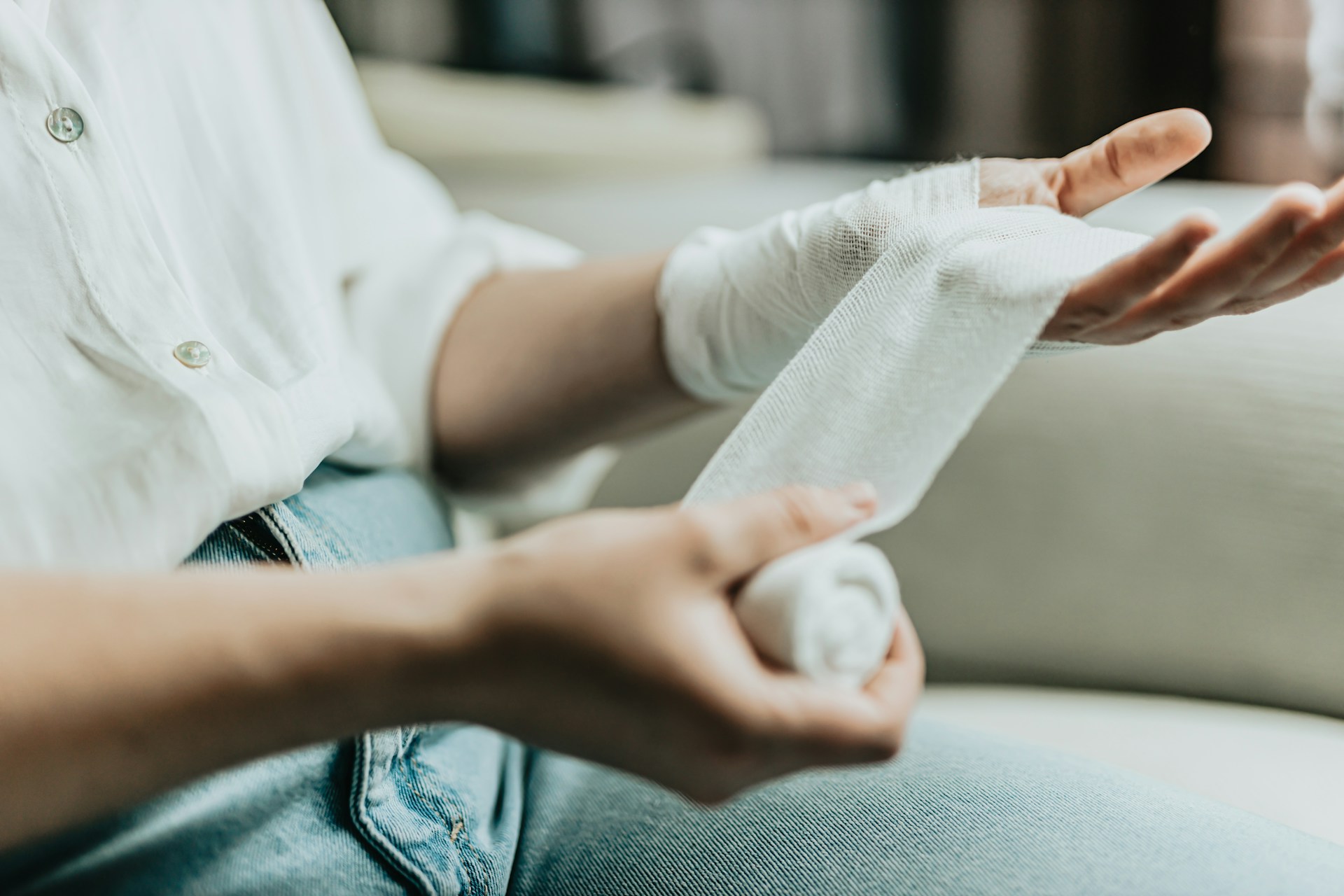
After cooling, gently cover the affected area with a clean, nonstick dressing.
Avoid applying tight bandages or materials that may stick to the injured skin.
Step 4: Manage Discomfort
Over-the-counter pain relievers may help with minor burn discomfort when they are safe for the individual.
Follow medication instructions carefully, particularly for children and people with chronic medical conditions.
Step 5: Monitor Healing
Watch for increasing pain, redness, swelling, drainage, or other signs that the burn may be becoming infected.
If the injury is not improving as expected, seek medical evaluation.
What Should You Avoid Putting on a Burn?
Several common home remedies can irritate burned skin or increase the risk of complications.
Avoid applying:
- Ice directly to the burn
- Butter
- Cooking oil
- Toothpaste
- Harsh cleaning chemicals
- Rubbing alcohol
- Unverified home remedies
These substances do not reliably improve burn healing and may worsen irritation or make the injury more difficult to evaluate.
For a small, uncomplicated burn, gentle cleaning and an appropriate protective dressing are usually more useful than applying multiple products.
Should You Pop a Burn Blister?
Do not intentionally pop a burn blister at home.
Blisters form when fluid collects between layers of damaged skin. The overlying skin provides a protective barrier while the underlying tissue heals.
Popping a blister can increase the risk of infection.
If a blister breaks on its own:
- Wash your hands before touching the area.
- Gently clean the wound with water and mild soap.
- Avoid pulling away attached skin.
- Cover the area with a sterile, nonstick dressing.
- Monitor for signs of infection.
Large, painful, or unusually positioned burn blisters may require professional wound care.
How Long Does a Minor Burn Take to Heal?
Healing time depends on the depth, size, location, and cause of the burn.
A superficial first-degree burn may heal within several days.
A small superficial partial-thickness burn may take approximately one to three weeks to heal, depending on the extent of tissue damage.
Deeper burns can take considerably longer and may cause scarring.
Healing may also be affected by:
- Diabetes
- Poor circulation
- Infection
- Repeated irritation
- Certain medications
- Other underlying medical conditions
A burn that is not healing or appears to be worsening should be evaluated by a healthcare professional.
How Can You Tell If a Burn Is Infected?
A burn damages the skin’s protective barrier, which can increase the risk of infection.
Possible warning signs include:
- Increasing redness beyond the burned area
- Spreading warmth
- Worsening swelling
- Increasing pain after initial improvement
- Pus or cloudy drainage
- Unpleasant odor
- Fever
- Red streaks extending from the wound
Some redness and discomfort are expected during the early healing process. However, symptoms that progressively worsen may indicate infection.
Seek medical attention if signs of infection develop.
When Should You Visit Urgent Care for a Burn?
Urgent care may be appropriate for smaller burns that need medical evaluation but do not have emergency warning signs.
Consider urgent care for:
- A small burn with painful blistering
- A minor burn that is not healing as expected
- Increasing tenderness or localized redness
- A suspected minor wound infection
- A small burn requiring professional dressing or wound care
- Persistent discomfort despite appropriate home treatment
- Questions about tetanus vaccination after a burn
A healthcare provider can evaluate the depth of the injury, examine for infection, and recommend appropriate wound care.
Some burns that initially appear minor may require referral for more specialized treatment.
When Should You Go to the ER for a Burn?
Emergency care is necessary when burns are extensive, deep, or associated with potentially serious complications.
Seek emergency medical evaluation for:
- Deep burns or suspected third-degree burns
- Large areas of blistering or skin damage
- Significant burns involving the face, hands, feet, genitals, or major joints
- Burns extending around an arm, leg, or chest
- Serious chemical burns
- Electrical burns
- Burns associated with smoke inhalation
- Burns accompanied by difficulty breathing
- Severe pain or significant tissue damage
- Burns associated with major trauma
Call 911 for severe burns, breathing problems, altered consciousness, or other life-threatening symptoms.
Why Chemical and Electrical Burns Need Special Attention
Chemical and electrical burns can cause damage that is not immediately visible.
Chemical Burns
Household cleaning products, industrial chemicals, and other substances can injure the skin.
If a chemical exposure occurs, avoid further contact and follow appropriate first-aid guidance for the substance involved. Remove contaminated clothing when safe, and flush affected skin with running water for many common chemical exposures.
Some chemicals require special handling, so contact Poison Control at 1-800-222-1222 for guidance in the United States.
Seek emergency evaluation for serious chemical burns or exposure involving the eyes, breathing, or extensive skin damage.
Electrical Burns
Electrical injuries may affect muscles, nerves, and the heart even when there is little visible skin damage.
Household electrical injuries involving significant current, symptoms, loss of consciousness, or suspected internal injury require emergency evaluation.
Do not touch someone who remains in contact with an electrical source. Make sure the power source is disconnected before approaching.
Minor Burns in Children
Children are particularly vulnerable to burns from hot liquids, cooking surfaces, and household appliances.
Even a relatively small burn can be more concerning in a young child because of differences in skin thickness and body size.
Parents should seek medical evaluation for:
- Blistering burns in infants or young children
- Burns involving the face, hands, feet, or genitals
- Burns covering a large area
- Severe or persistent pain
- Burns with signs of infection
- Injuries involving chemicals or electricity
If a child has a severe burn, difficulty breathing, or other life-threatening symptoms, call 911.
How to Prevent Burns at Home
Many household burns can be prevented through basic safety practices.
Helpful strategies include:
- Turn pot handles toward the back of the stove.
- Keep hot beverages away from table edges.
- Keep children away from cooking surfaces.
- Test bathwater temperature before bathing children.
- Store curling irons and hair straighteners safely.
- Use oven mitts when handling hot cookware.
- Keep chemicals in their original labeled containers.
- Store household cleaning products out of children’s reach.
- Use appropriate sun protection outdoors.
- Maintain working smoke alarms.
Burn prevention is especially important in homes with young children, older adults, or individuals with reduced mobility.
What to Expect During a Medical Evaluation for a Burn
When a patient seeks medical attention for a burn, the provider will evaluate the injury and determine whether additional treatment is necessary.
The assessment may include:
- Identifying the cause of the burn
- Estimating burn depth
- Evaluating the size of the affected area
- Checking for infection
- Assessing circulation and sensation
- Reviewing tetanus vaccination history
- Determining whether specialized care is needed
Treatment may involve wound cleaning, protective dressings, pain management, and additional care based on the injury.
More serious burns may require specialized burn treatment or hospital-level care.
iCare ER & Urgent Care: Treatment for Burns and Skin Injuries
Burns can range from minor household injuries to serious medical emergencies. Knowing the appropriate level of care can help patients receive timely treatment.
At iCare ER & Urgent Care, our medical team evaluates patients experiencing burns, wounds, skin injuries, and other urgent medical conditions.
With locations in Frisco, Forney, and Fort Worth, patients have access to both urgent care and emergency services based on the severity of their symptoms.
Urgent care may be appropriate for smaller burns requiring professional wound care, while severe or extensive burns require emergency evaluation.
Emergency services are available 24 hours a day, seven days a week.
Frequently Asked Questions
What is the fastest way to heal a minor burn?
Immediately cooling a minor thermal burn under cool running water for approximately 20 minutes can help limit additional tissue damage. Keeping the area clean, protecting it with a nonstick dressing, and avoiding further irritation can support healing.
Should I put ice on a burn?
No. Applying ice directly to burned skin can cause additional tissue damage. Cool running water is generally recommended for initial first aid after a minor thermal burn.
Should you pop a blister caused by a burn?
No. Burn blisters help protect the injured skin underneath. Intentionally popping them can increase the risk of infection. Large or painful blisters may require professional evaluation.
Should I go to urgent care or the ER for a burn?
Urgent care may be appropriate for a small burn with painful blistering, delayed healing, or suspected localized infection. Deep burns, extensive burns, serious chemical or electrical injuries, and burns associated with breathing problems require emergency evaluation.
How do I know if my burn is infected?
Signs of infection may include spreading redness, increasing pain, swelling, warmth, pus, fever, or red streaks extending from the affected area. A burn with worsening symptoms should be medically evaluated.
Conclusion
Minor burns are common household injuries that often improve with appropriate first aid and basic wound care. Cooling the affected area with running water, protecting the skin, avoiding unnecessary blister drainage, and monitoring for infection can help support healing.
However, not every burn is minor. Deep burns, extensive blistering, chemical or electrical injuries, and burns involving sensitive areas of the body may require emergency evaluation.
At iCare ER & Urgent Care, patients in Frisco, Forney, and Fort Worth can seek medical evaluation for burns and other skin injuries.
When a burn is small and uncomplicated, home care may be appropriate. When symptoms worsen or the injury is more serious, timely medical evaluation can help prevent complications and support recovery.